
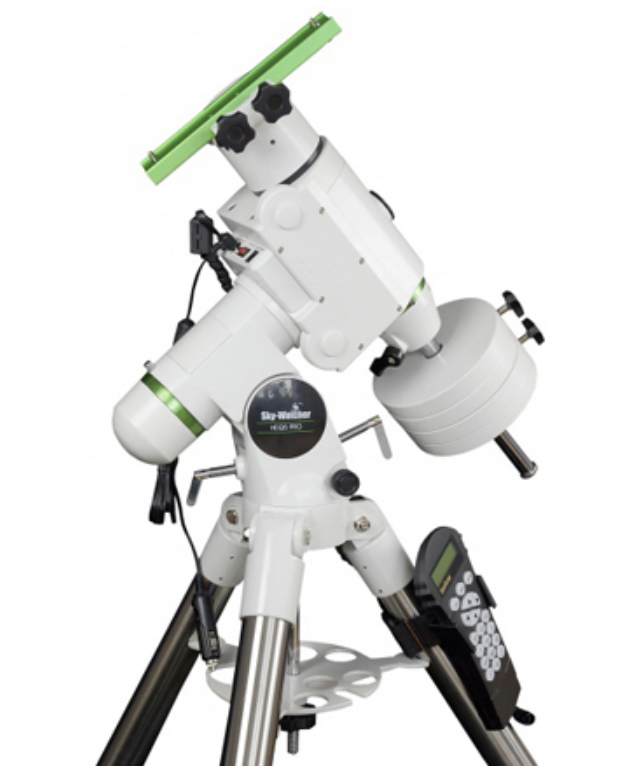
Viime vuosina luontokuvaukseni on kulkenut pitkin metsiä, soita ja rantoja — siellä missä valo ja elämä liikkuvat maan pinnalla. Nyt olen kuitenkin uuden suunnan edessä. Olen nimittäin hankkinut Sky-Watcher HEQ5 Pro -kääntöjalustan ja astunut ensi kertaa kunnolla astrokuvauksen maailmaan.
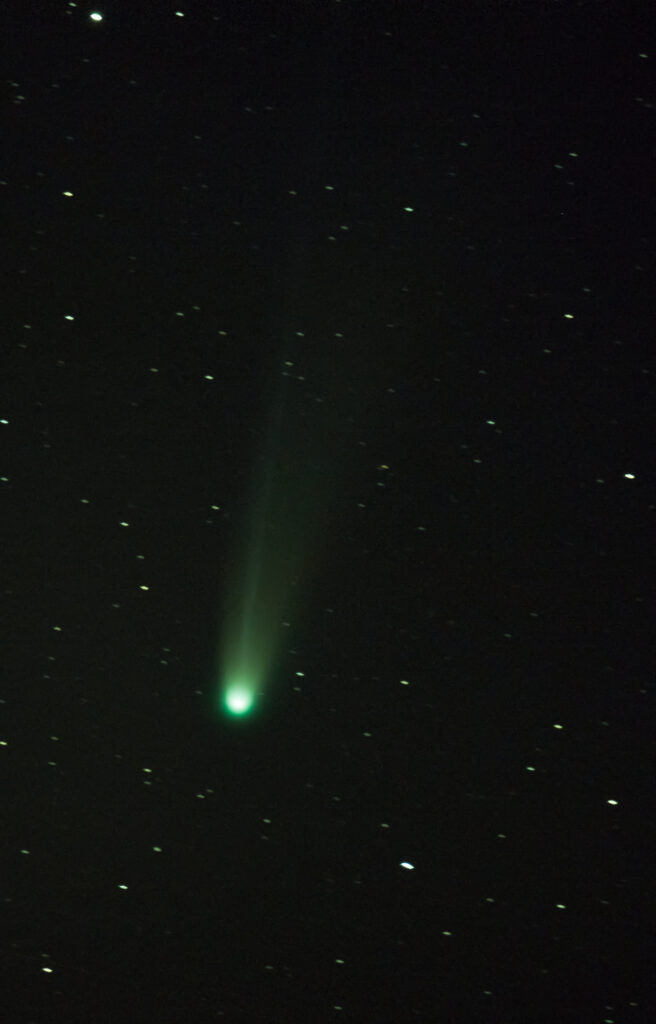
Olen aiemmin ottanut muutamia kuvia taivaankappaleista: kuusta, Andromedasta ja parista komeetasta, viimeisimpänä komeetta Lemmonista. Kokemuksesta voin sanoa, että avaruuden kuvaaminen tavallisella jalustalla on yhtä aikaa kiehtovaa ja turhauttavaa. Kun kamera on kiinteästi paikallaan, valotusaika täytyy pitää todella lyhyenä, yleensä 2–4 sekunnissa, jotta tähtien liike ei muutu viiruiksi. Niissä sekunneissa kennolle ehtii kuitenkin vain murto-osa siitä valosta, joka oikeasti täyttää taivaan.
Siksi päätin ottaa seuraavan askeleen ja hankkia asianmukaista lisäkalustoa.
HEQ5 Pro on niin sanottu saksalainen ekvatoriaalijalusta, joka seuraa tähtien liikettä maapallon pyörimisen vastaisesti. Käytännössä tämä tarkoittaa sitä, että kamera ja putki voivat seurata taivaan kohteita tarkasti jopa minuuttien ajan, ilman että tähdet venyvät. Jalusta on tarkoitettu keskikokoisille kaukoputkille ja teleobjektiiveille, ja se on erinomainen kompromissi kannettavuuden ja tarkkuuden välillä.
Tämän jalustan avulla voin alkaa kuvata syvän taivaan kohteita: sumuja, galakseja ja tähtijoukkoja — kohteita, jotka ovat olleet tähän asti vain kaukaisia valopisteitä kuvissani. Samalla edessä on kuitenkin täysin uusi oppimiskäyrä: napasuuntaus, autoguidaus, pinoaminen, kalibrointikuvat, seurannan virheet… lista on loputon.
Rehellisesti sanottuna olen tässä vaiheessa vielä täysi rookie, mutta samalla innostunut kuin ensimmäistä kertaa lintutornissa kiikarin kanssa. On hieno tunne aloittaa jotain uutta, jossa voi olla jälleen aloittelija ja jossa jokainen onnistunut valotus tuntuu pieneltä ihmeeltä.
Ehkä joskus myöhemmin voin kirjoittaa tänne, miten ensimmäiset kunnolliset tähtikuvat syntyivät — mutta toistaiseksi opettelen vielä sitä, miten planeetat eivät karkaa kuvasta heti ensimmäisellä minuutilla.
In english
In recent years, my photography has mostly followed forests, marshes, and shorelines. Places where light and life move close to the ground. But now I’m standing at the edge of a new direction. I’ve just acquired a Sky-Watcher HEQ5 Promount and taken my first real step into the world of astrophotography.
I’ve photographed a few celestial objects before — the Moon, the Andromeda Galaxy, and a couple of comets, the most recent one being Comet Lemmon. From experience, I can tell you that photographing space objects with just a camera and a fixed tripod is both fascinating and frustrating. Since the Earth rotates, exposure times must be kept extremely short, typically 2–4 seconds, otherwise the stars turn into streaks. But in such a short time, the camera sensor gathers only a fraction of the light that truly fills the night sky.
That’s why I decided to take the next step and get a tracking mount. The HEQ5 Pro is a German equatorial mount that follows the movement of the stars opposite to the Earth’s rotation. In practice, this means that the camera and telescope can track celestial objects for several minutes without the stars trailing off into streaks. The mount is designed for medium-sized telescopes and telephoto lenses — a great balance between portability and precision.
With this setup, I can finally begin to capture deep-sky objects: nebulae, galaxies, and star clusters, those things that have so far appeared only as faint points of light in my photos. But with that comes a whole new learning curve: polar alignment, autoguiding, stacking, calibration frames, tracking errors… the list goes on.
To be honest, I’m still a total rookie at this, but at the same time I’m as excited as I was the first time I climbed a birdwatching tower with binoculars. It’s a great feeling to start something new, to be a beginner again, and to see every successful exposure as a small miracle.
Maybe later I’ll write a follow-up post about how the first real astrophotos came to life. But for now, I’m still learning how to keep the planets from drifting out of the frame in under a minute.