Lue tämä postaus suomeksi:
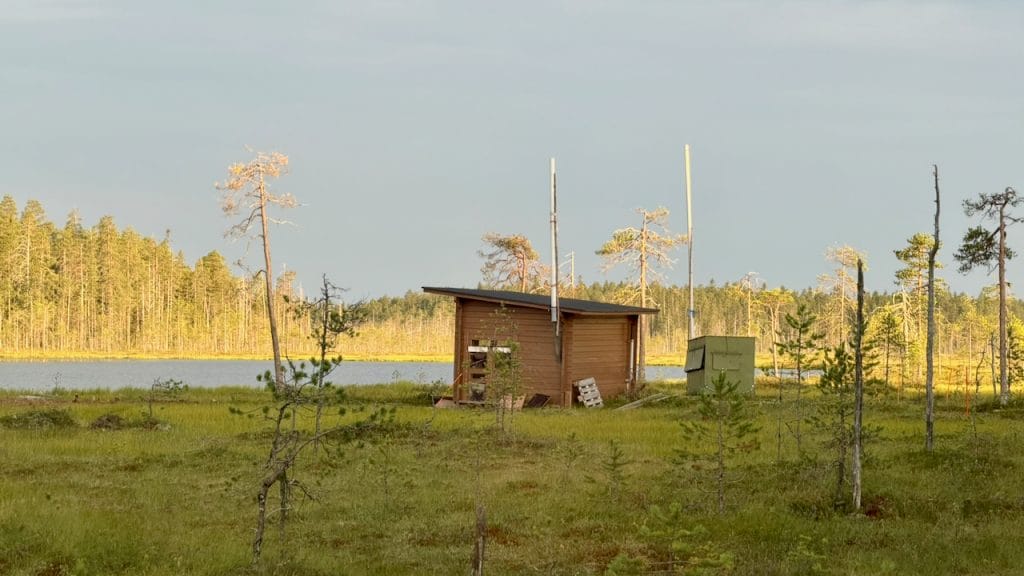
In the boreal taiga of Kuhmo, pressed against Finland’s eastern border with Russia, Viiksimo endures as a sanctuary for Northern Europe’s most elusive megafauna. Here, among pristine peat bogs, stands of old-growth pine, and silent wilderness lakes, the Boreal Wildlife Centre serves as my base for pursuing intimate, low-angle images of brown bears (Ursus arctos) and wolverines (Gulo gulo). The centre’s network of purpose-built hides, each sited across distinct microhabitats, grants rare access to natural behaviour in true wilderness. From a converted border guard station, a team of naturalists has shaped this remote frontier into one of the world’s premier locations for large-carnivore photography, where late-afternoon light, apex predators, and the quiet, persistent tension of the taiga meet.
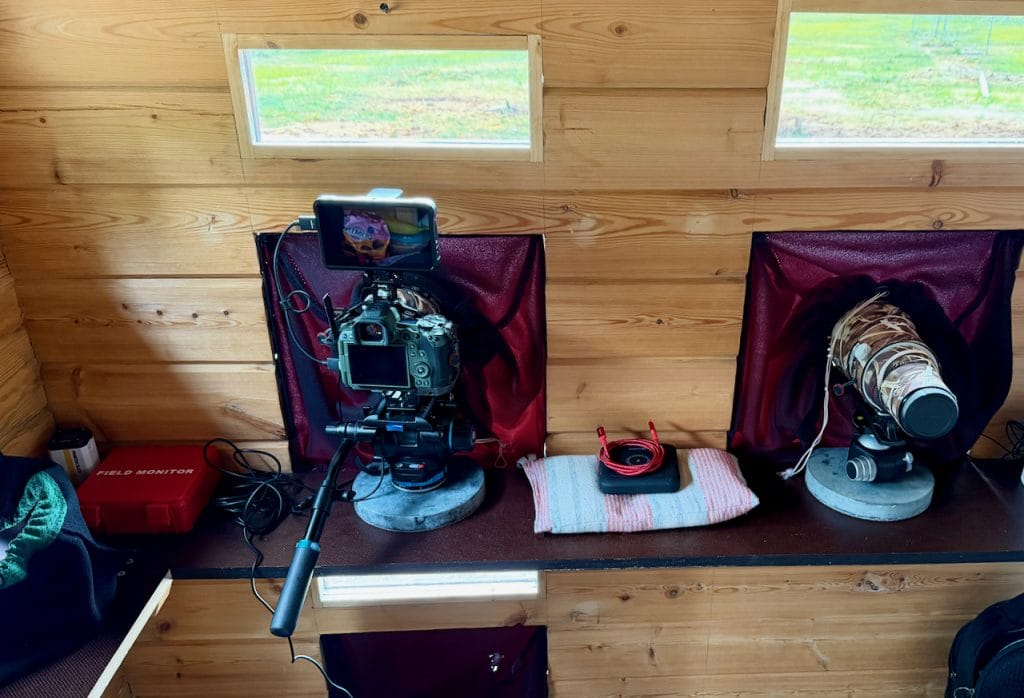
I visited the centre in late July for two full night-photography sessions. After arriving just ahead of the 3:00 PM departure to the hides, I had a quick dinner and prepared night rations before heading into the field with our guide. The centre offers a variety of hides to suit different needs, ranging from intimate one-person hides to large, 10-person setups. At the site, a brief orientation to the area and the hide’s mechanics preceded the careful setup of my camera gear on the dedicated mounting heads along the front wall. Hide-based photography here requires full commitment; once inside, photographers remain until around 7:30 AM, when the guide returns to escort the group back to the main centre for breakfast.
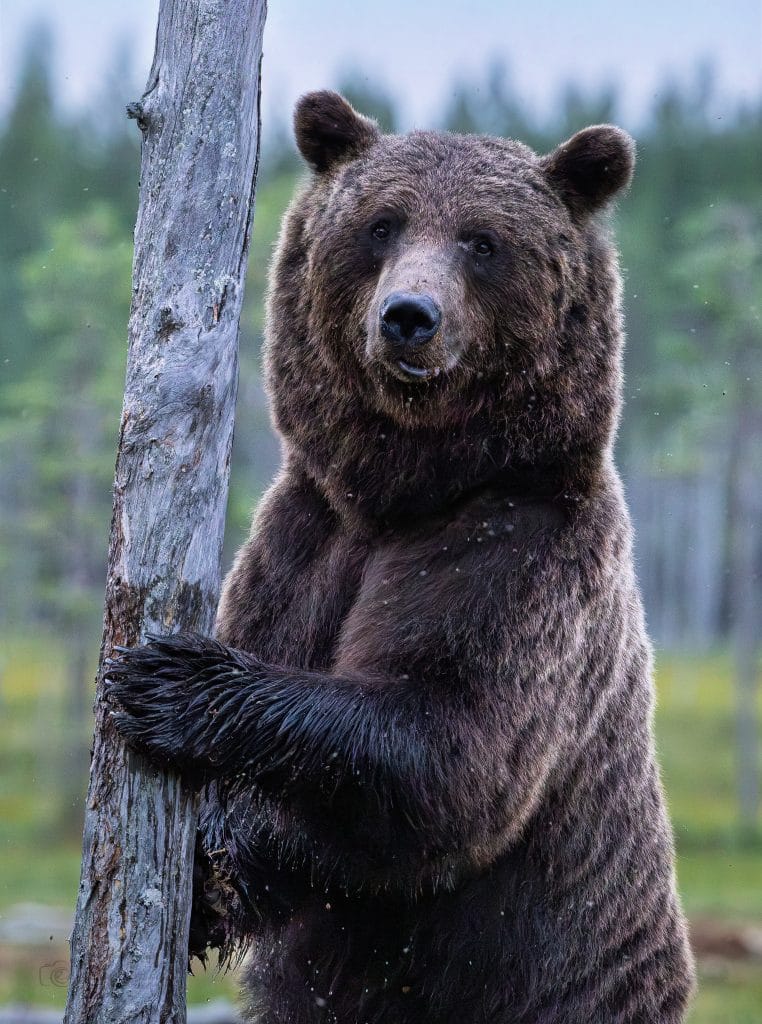
The evening unfolded quietly, marked only by gulls and ravens combing the open ground in front of the hides, where our guide had left bait. Around 8:00 PM, the silence shifted as the first bear appeared—a massive, confident male, clearly familiar with the terrain. It moved through the taiga with the silent assurance of an apex predator, emerging without a sound. With methodical precision, the dominant boar inspected each feeding site, claiming the strategically placed morsels, mainly salmon scraps and similar offerings, and providing close-range opportunities for the camera.
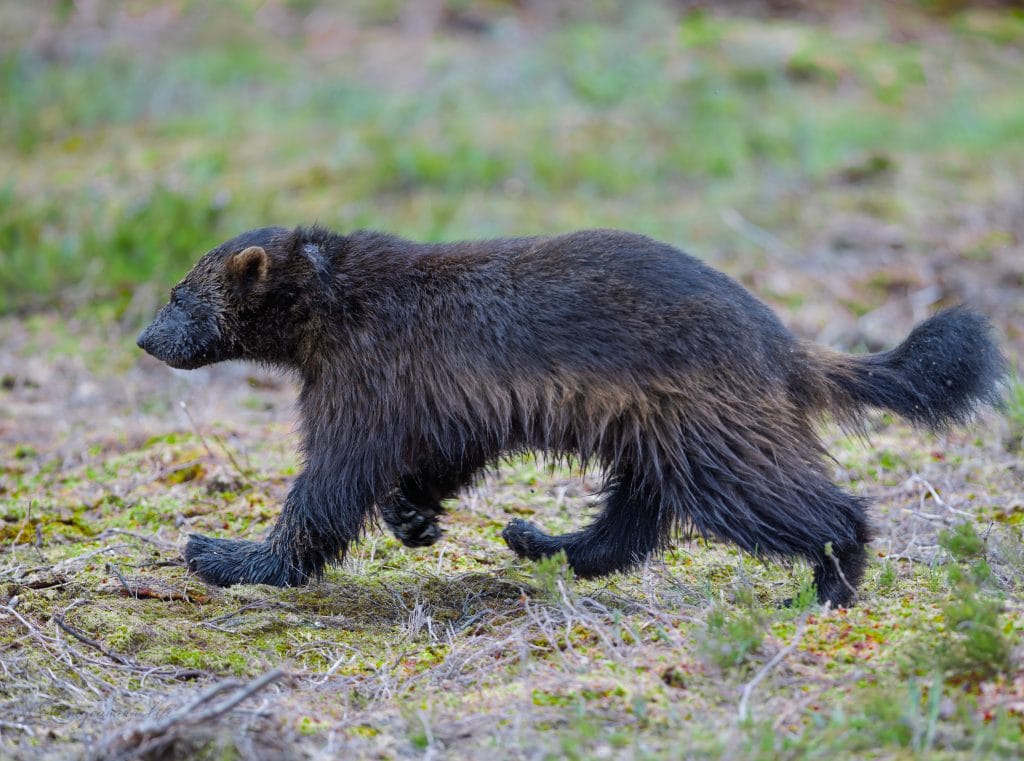
The bear eventually circled the far shore of the foreground peat-pond, skirting the edges before disappearing into the treeline. Later, I learned it had come right up to the back of my hide, standing just inches away on the other side of a thin plywood door. Even with the tall ventilation pipes designed to vent human scent above the canopy, I suspect these apex predators remain acutely aware of our presence. As twilight deepened into northern dusk, a wolverine (Gulo gulo) entered the scene. It moved with greater energy and urgency than the bear, expertly raiding the same hidden caches and displaying remarkable agility in the low light.
Inside, the hide was practical and well-equipped for two people, with a basic dry toilet that let me answer nature’s call without missing a moment of the action outside. I kept myself sharp through the long midnight hours with steady doses of black coffee and snacks. Around 7:30 AM, the welcome sound of an approaching engine and the muffled thud of a car door signalled the guide’s arrival to escort us back. After a hearty breakfast at the centre, I retired for a well-earned day’s sleep, waking refreshed and ready for the second night—which unfolded with much the same thrilling rhythm as the first.
For the second night, I was assigned to a newer hide, constructed from solid light-log timber and notably more spacious than the previous. The higher ceiling and open, airy layout made for a comfortable working environment, while the modern features—multiple fabric lens sleeves with drawstrings, a separate enclosed toilet compartment, and four full-sized bunks—reflected thoughtful design for extended sessions. During the dim twilight hours between midnight and 3:00 AM, when the light fell below the threshold for telephoto work even with gear mounted on tripod heads, I took the opportunity for a brief, restorative nap. My vigilance paid off: over the course of the night, I observed two different bears, a wolverine, and a striking white-tailed eagle (Haliaeetus albicilla), in addition to the regular local birdlife. Observing these wild species move through their routines, undisturbed and unaware of my presence, from the quiet seclusion of the hide, remains an experience etched in memory.
Inside the hide, my kit was pared down to essentials: a single Canon EOS R5 Mark II body, paired with two fast primes—a 300mm f/2.8 and a 600mm f/4. The 300mm served as my primary lens, its wide-open aperture crucial for gathering the last traces of light as dusk settled over the peat-pond. The 600mm, meanwhile, delivered fine detail on distant subjects, yielding strong frames of the white-tailed eagle and the male bear as it moved along the water’s edge. While zooms such as a 100–500mm or 70–200mm provide flexible framing in more dynamic scenarios, the light-gathering ability of fast primes is a decisive advantage in these conditions. The mammals here, particularly the bears, move with a steady, deliberate cadence. Unlike the frenetic pace of bird photography, their calm passage allows time to fine-tune exposure, adjust f-stops, and compose each frame with precision.
During the shoot, I utilised the full ISO range available. In bright sunlight, the camera typically set the ISO between 100 and 400. However, as dusk fell or under heavy cloud cover, the ISO scaled up accordingly. I’ve set my Auto ISO cap at 25600, but during this shoot, it maxed out at 12800, though even with post-processing, those photos were tough to salvage into high-quality shots. Shutter speeds ranged from 1/30 to 1/2000s, depending on the subject’s speed and the amount of ambient light.
Photographing elusive mammals from these modern, well-maintained hides proved both safe and highly effective, allowing for respectful observation of natural behaviour in authentic habitat. Conversations with the centre’s owner and guide revealed a deep professionalism and a clear commitment to wildlife welfare and the integrity of the surrounding ecosystem. Even by Finnish standards, this region stands apart: the proximity to the eastern border, combined with the expanse of untouched taiga and the presence of free-roaming apex predators, imparts a persistent sense of wildness. I do not expect this to be my last visit to Viiksimo. I will return to these hides.